
The Telegram from Novominsk
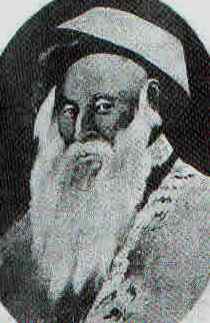 A story ofChacham Yaakov Shaul Elyasharהרב יעקב שאול בן אלעזר ירוחם אלישר
It is told that one day Rav Yaakov Shaul received a telegram from Warsaw, dated 13 July 1906. The sender wrote that he was a rabbi in Novominsk, writing on behalf of his whole congregation. A few months earlier, he said, a government official named Nacziolink had been murdered. Two brothers, Eliezer and Noach Horowitz, together with a woman named Motol, had falsely testified against five non-Jews. These gentiles were innocent, but out of hatred for them the Jews had fabricated testimony, and now all five were condemned to death.
The telegram went on to say that the three witnesses had fled and were now in Yerushalayim, in the home of Yitzchok Freidman of Mezritsh. The rabbi asked Rav Yaakov Shaul to find them and get them to admit that their testimony was false and born of hatred. This, he wrote, would save the innocent men from execution and would spare the Jews of Novominsk from hatred, threats and pogroms. He asked Rav Yaakov Shaul to contact the Russian consul in Yerushalayim, who would know how to send a telegram to Warsaw, and he signed it Rav Rabinowitz, Novominsk, Warsaw.
The Rishon LeTzion was very surprised. He asked his secretary, Rav Chaim Michel Michelin, to try to locate the people named. When they were found, they insisted that their testimony was true and that the accused had in fact murdered the official.
Rav Yaakov Shaul called an urgent meeting of rabbanim and communal leaders. While they discussed the matter, he sat silently. At the end he rose and said that in his opinion the telegram was a setup and a trap. "Perhaps the entire telegram is a forgery. Either the rabbi who signed does not know what he signed, or his name has been forged, or he was forced under threat to sign against his will. If we answer in any way, it can lead to violence and pogroms against the Jews there. I see two choices. Either we ignore it completely, or we politely reply that as Chacham Bashi under Turkish rule and law, I am in no position to interfere in the affairs of a foreign country."
Not everyone agreed, and some disagreed. Rav Yaakov Shaul suggested asking the opinion of the revered chief Ashkenazic rav, Rav Shmuel Salant. A delegation set out late at night to find him. They told him of the disagreement but did not reveal the Rishon LeTzion's view, so as not to influence him. They stressed that they were certain the telegram was fabricated, and that either the rabbi of Novominsk knew nothing of it or his name had been forged.
Rav Salant answered that they should either ignore it or reply that the Chacham Bashi, under Turkish rule and law, was forbidden to interfere in the foreign affairs of another country. When this reached the meeting in the home of the Rishon LeTzion, everyone was astounded that the two sages, without conferring, had spoken like two prophets prophesying the same words.
They sent their reply by telegram exactly as both had advised, stating that they were forbidden to interfere with another nation's sovereignty in matters of foreign affairs. Some weeks later the Jewish newspapers HaZman and HaTzefira praised the wise sages of Yerushalayim for avoiding disaster by ignoring forged telegrams sent by enemies to ensnare the Jewish people. Had the rabbanim of Yerushalayim fallen into the trap, who knows where it would have ended?