
Torah Is Life
RefuahTorah learning
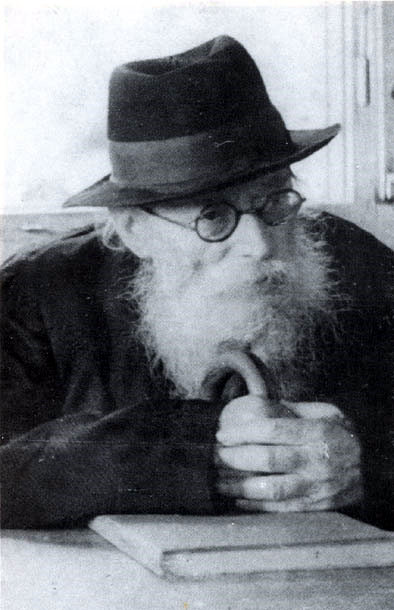 A story ofRav Avrohom Yeshaya Karelitzהרב אברהם ישעיה בן שמריהו יוסף קרליץ
Rav Avrohom Chaim Brim related that the Chazon Ish, held back by sickness and a frail body, never managed to learn as much as he longed to. But each time he sat down to learn, he drove himself until his strength was gone. His chavrusa, Rav Mordechai Shulam, said that a session stopped only when the Chazon Ish collapsed from exhaustion, and the next one waited until he had recovered enough to continue.
Once, in the middle of learning, the Chazon Ish picked up a fruit and began eating it without a brocho. Afterward he explained that he had exhausted himself so completely that he could not even gather the strength to recite the brocho, which he normally said slowly, and that without eating he might have endangered his health.
Those who knew him pointed out that when he cited a sefer and excused himself for giving only the gist because he lacked the volume, it did not mean the sefer was missing from his house. It could well have been on a shelf in that very room, and he was simply too drained to get up and fetch it. Thus he wrote about the most profound sugyos in the Torah while too weak to reach the bookcase, a living example of the teaching that Torah endures only in one who gives his life for it.
On one occasion Rav Mordechai Shulam found him lying in his bed the wrong way around, with his head where his feet belonged and his feet resting on the pillow. The Chazon Ish apologized. Had he possessed any strength before falling onto the bed to work out which way he lay, he said, he would have spent it on more learning.
He said that he could distinguish cold from heat only before he began a sugya; once he was absorbed in it, he could no longer tell. Taste and hunger, he said, were far-off memories from childhood. When weakness left him close to fainting, he treated it as a signal to eat, but only so as to regain strength for learning, not because he felt hungry.